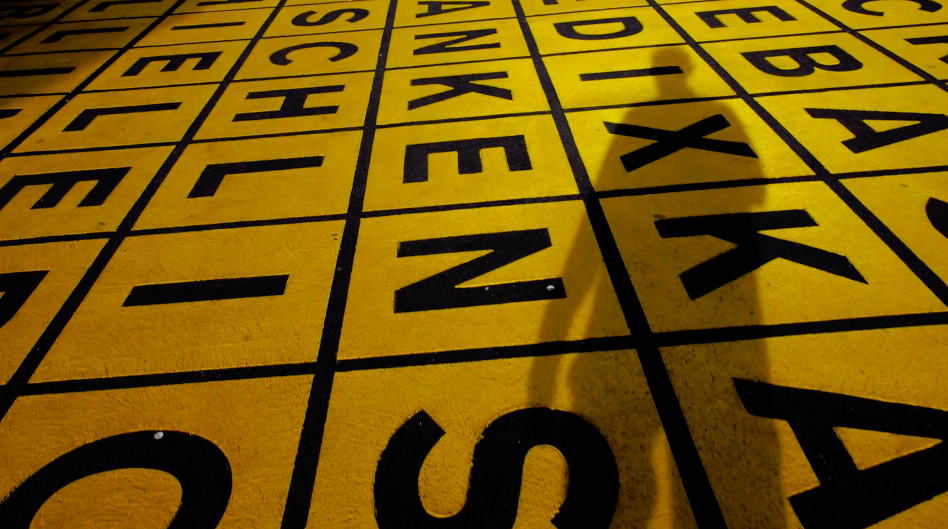
PoetryFilm Archive: Ruckenfigurphone by Sellotape Cinema
Sellotape Cinema are artists Stephen Snell and Steven Chamberlain. Sellotape Cinema creates film worked directly onto sticky tape and played through a specially adapted projector.

Sep 21
Sellotape Cinema are artists Stephen Snell and Steven Chamberlain. Sellotape Cinema creates film worked directly onto sticky tape and played through a specially adapted projector.
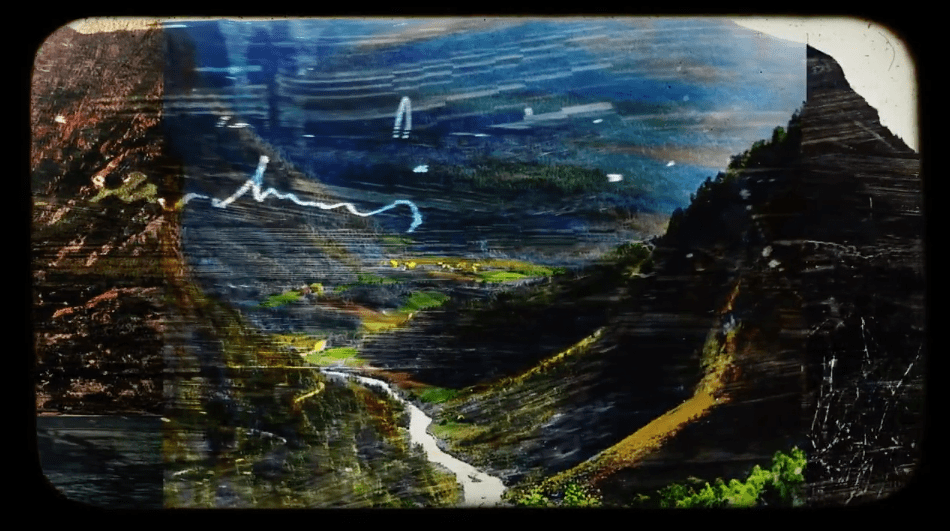
Holes in the Mountain is a poetry film by Kai Carlson-Wee, shot during a freight hopping trip from Oakland to Portland with his brother in the summer of 2014. Through video, photography, poetry, and music, the film creates an associative narrative structure that seeks to explore rural American landscapes, spiritual poverty, and the experience of traveling by freight. The poem has been published in The Missouri Review.
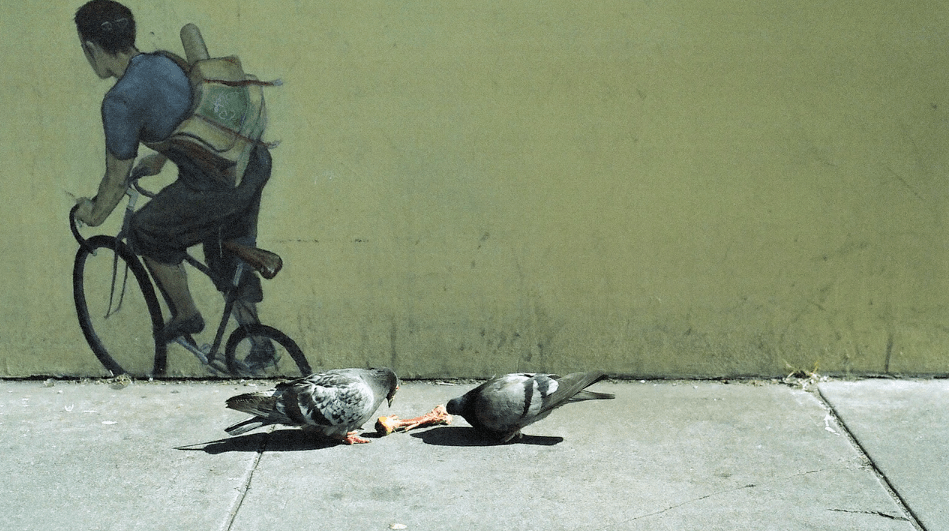
The film plays with the tension between images of shadows, a text describing shadows, and an audio independent from the images and text.
‘I am particularly interested in poetry in the broadest sense, that’s the key to my artistic work. Poetry for me is also a learning process and a search in the understanding of the other. Other objects, other persons.’
For a number of years Eduardo Romaguera considered giving his work another name: ‘Explorador would have been a good one. I believe “explorador” better reflects the work I’m doing.’
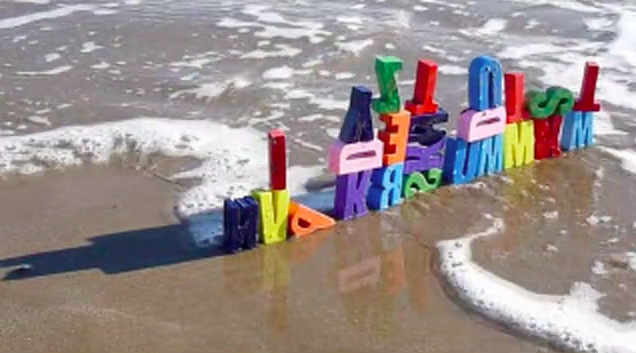
“I can think of nothing sadder than a goldfish in a bowl. Swimming in tight circles, such a lonely fishy soul…”
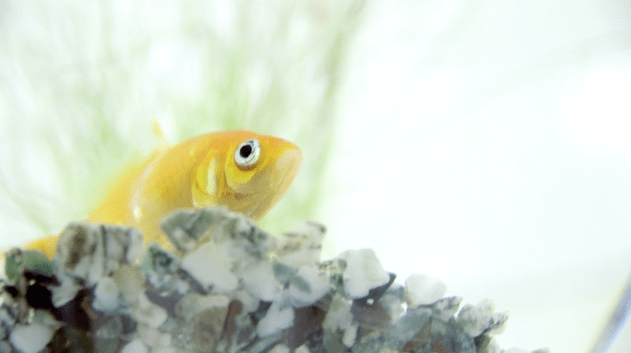
Timeless Time invokes a time outside of time where it is not possible to establish whether events have happened or are about to happen, if they are something imagined or a vague attempt to recapture that which lived before falling into the land of oblivion. Text excerpts are from the film Last Year at Marienbad by Alain Resnais (1961). The film is part of the international audio/visual project: Exquisite, What?
In Greek mythology, the battle between the Centaurs and the Lapiths reflects the battle between civilised society and wild behaviour.

Every Morning She’d Leave Me is the story of an ordinary man with an extraordinary history: his life in London in the 1960s underworld has been captured in a series of concrete poems created using his own words. Part poetry, part social document, the film features language from another time: watches on a villain’s wrists are “kettles” and dollars are “Oxford scholars”. The film is an animation set in American Typewriter Light.
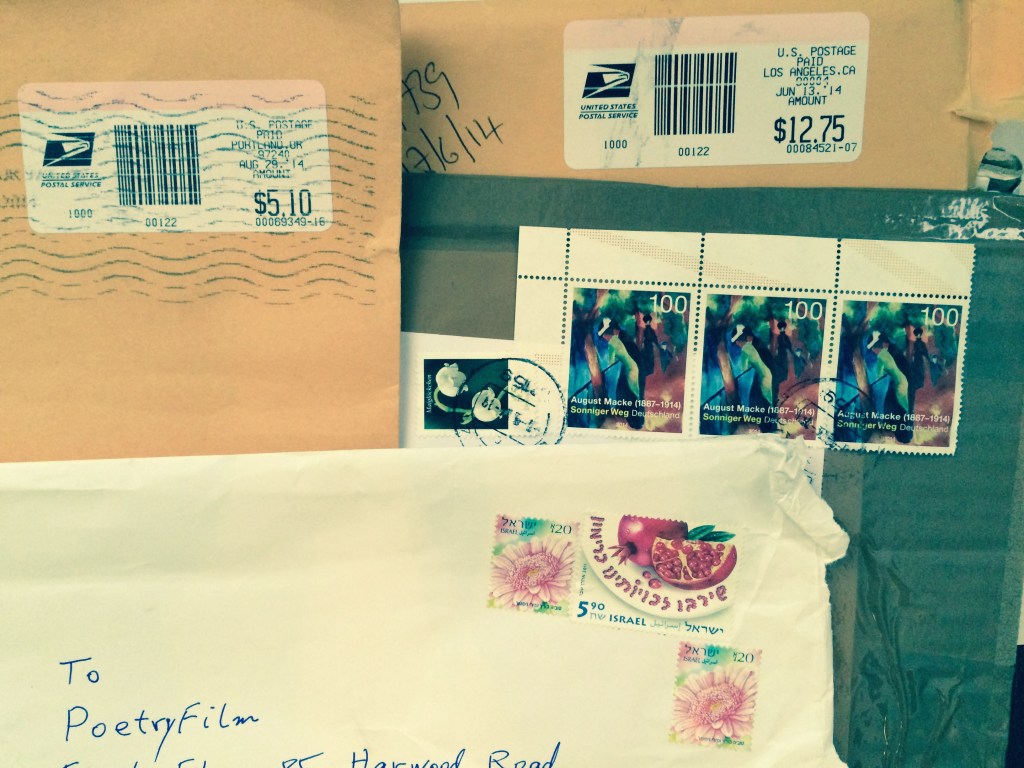
Featuring lilies of the valley and the Expressionist painter August Macke from Germany; pomegranates from Israel; and barcodes from Portland and L.A.
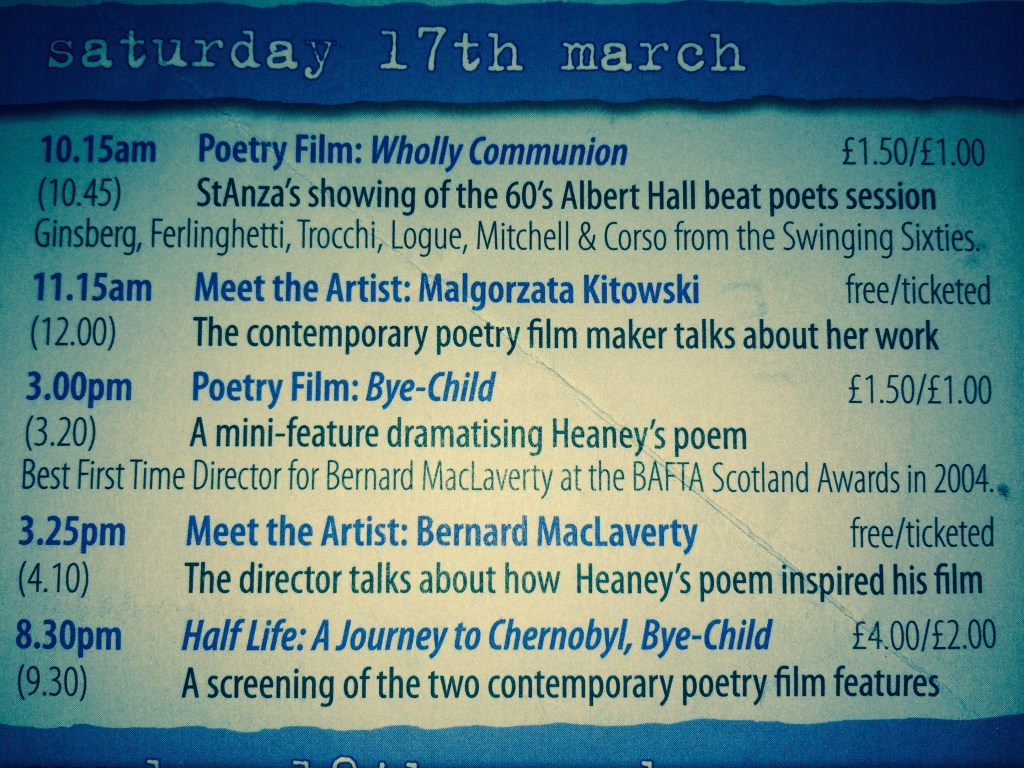
Detail from the StAnza programme in March 2007 where I gave a “Meet the Artist” session.
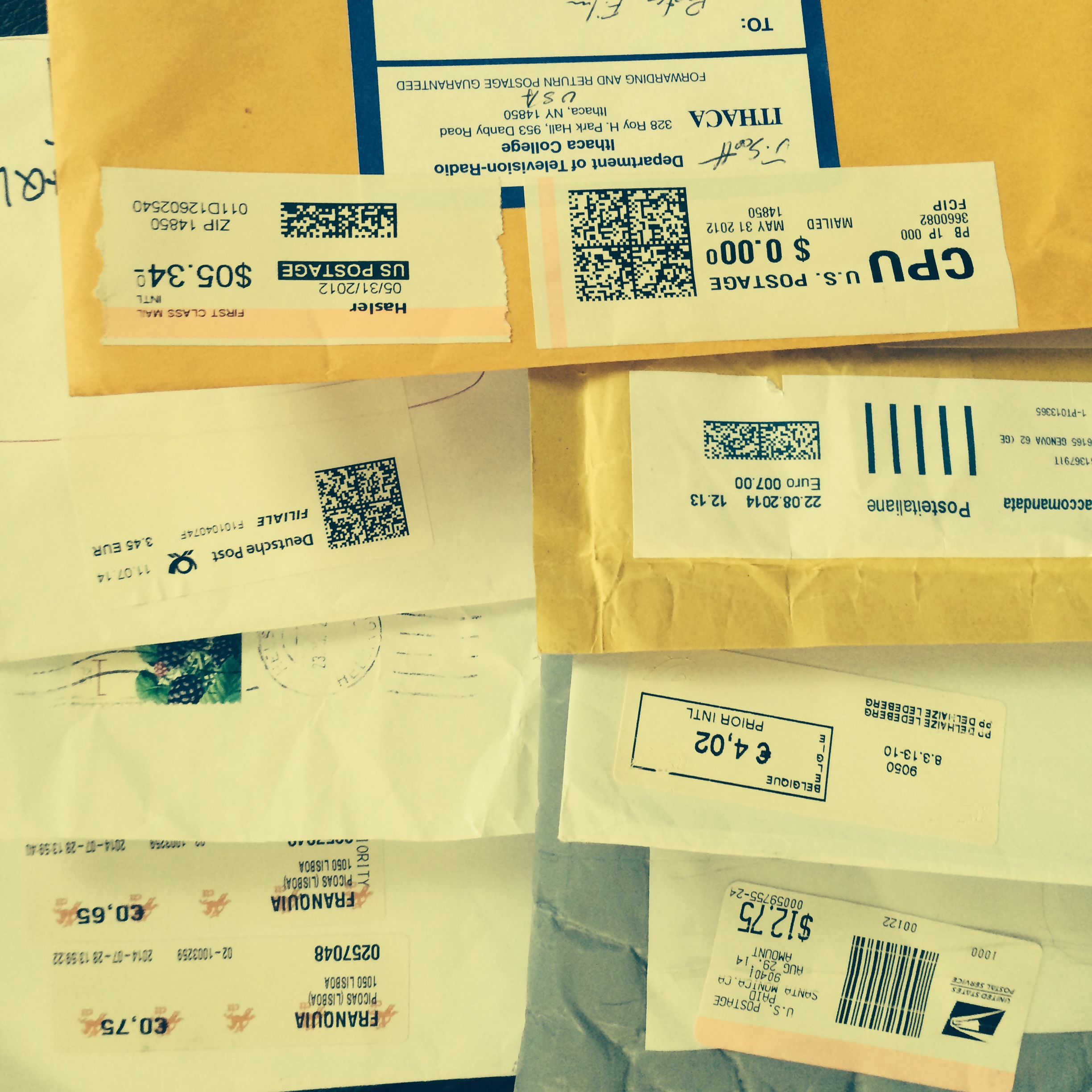
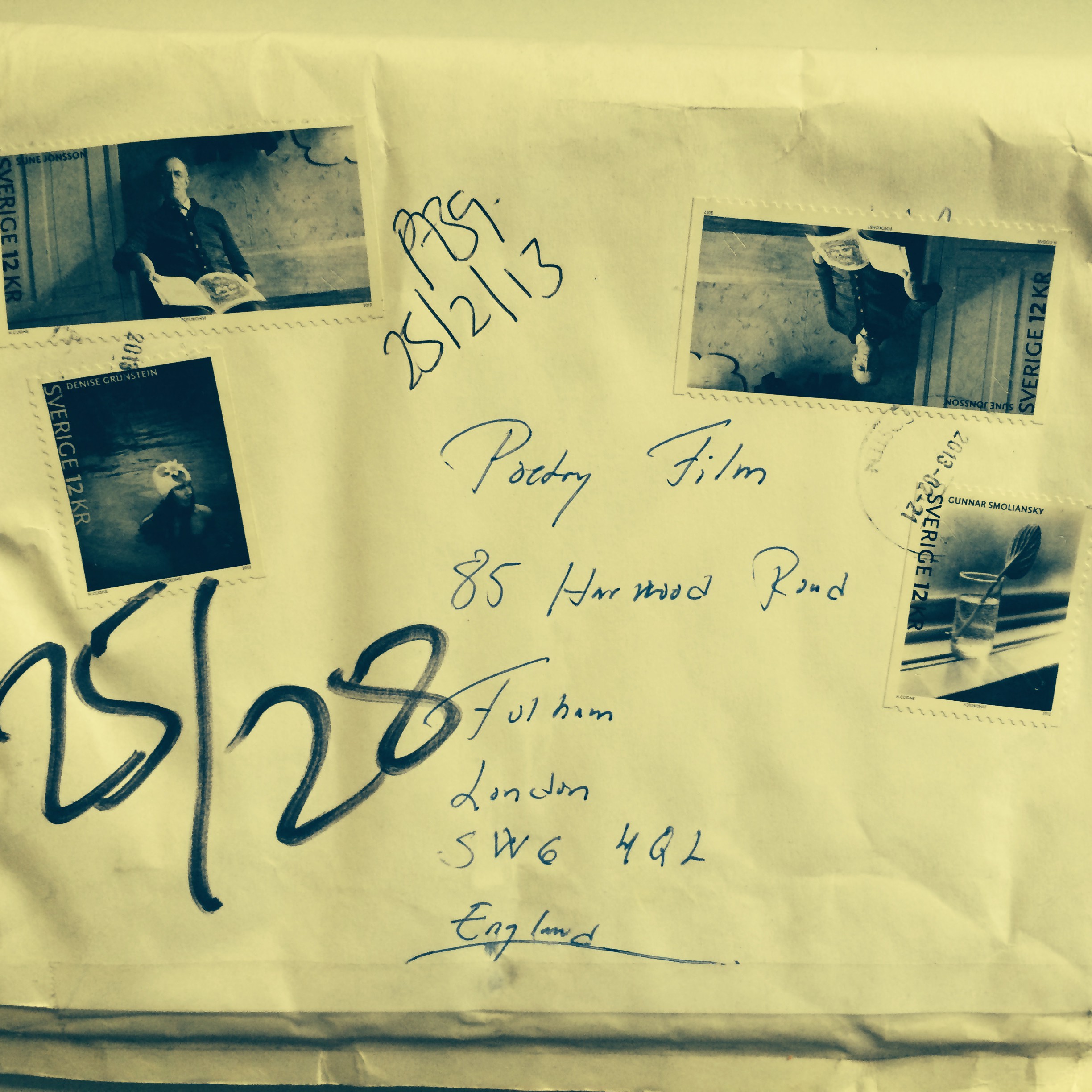
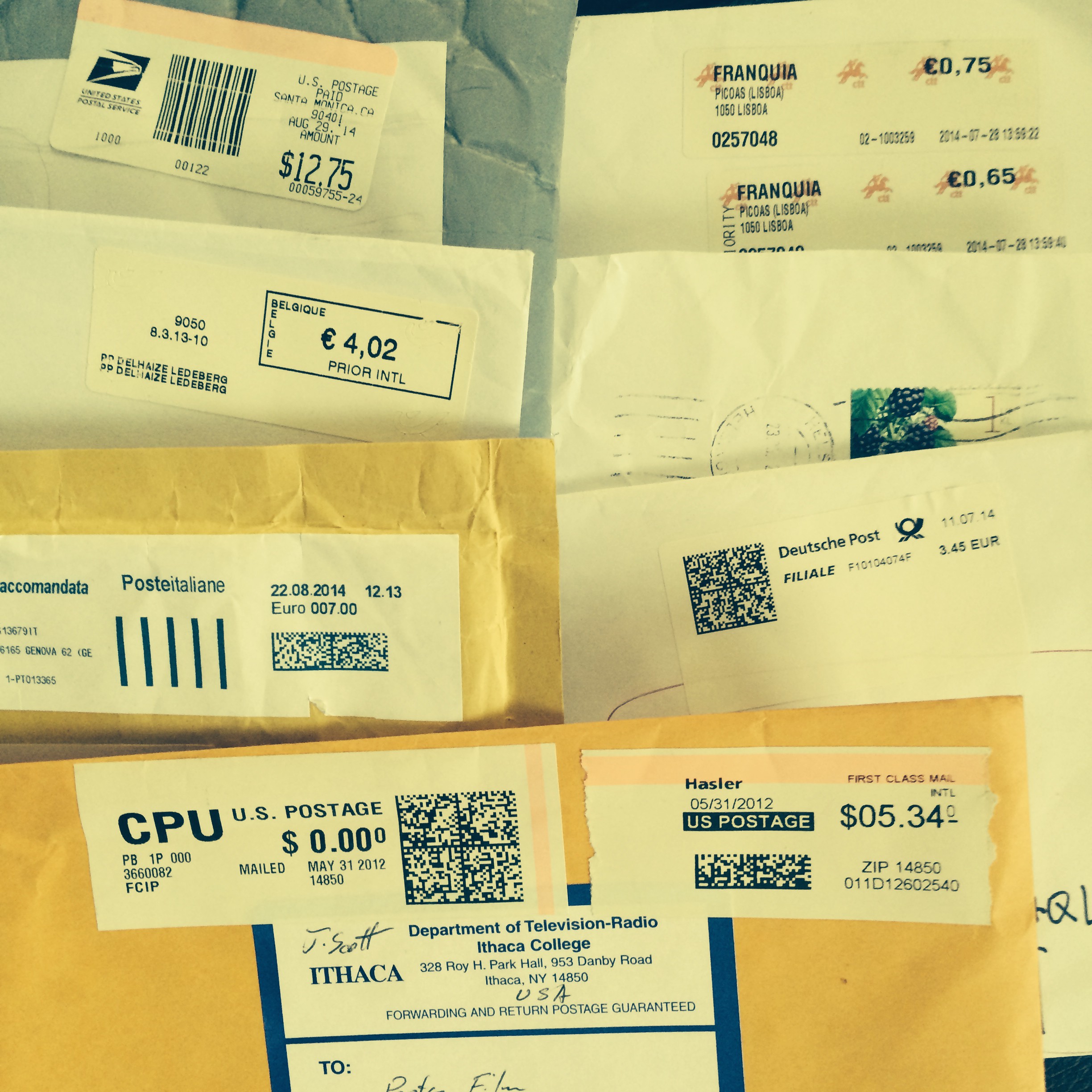
This is one of my favourite envelopes received. It is from Sweden and features four stamps of the important Swedish photographers Sune Jonsson (a documentary photographer and writer), Gunnar Smoliansky (a photographer of the understated), and Denise Grunstein (an ethereal portrait photographer) positioned jauntily.
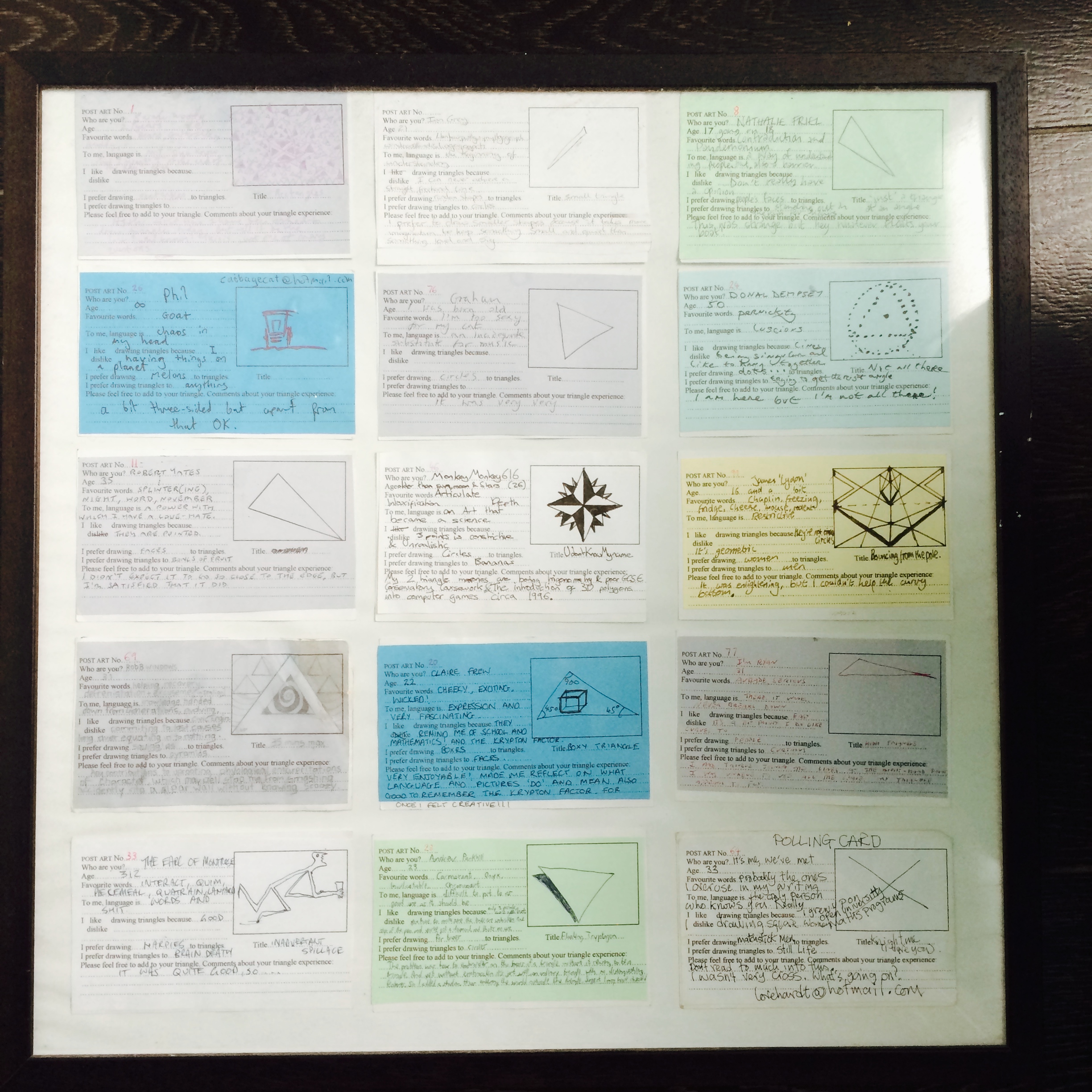
Here is a selection of postcards received from my Post Poem Post Card Art project in 2003.
The hand-made postcards were numbered and distributed around London with a stamp affixed.
Two Scenarios for Short Films: Je Suis Ici
[poem continues below]
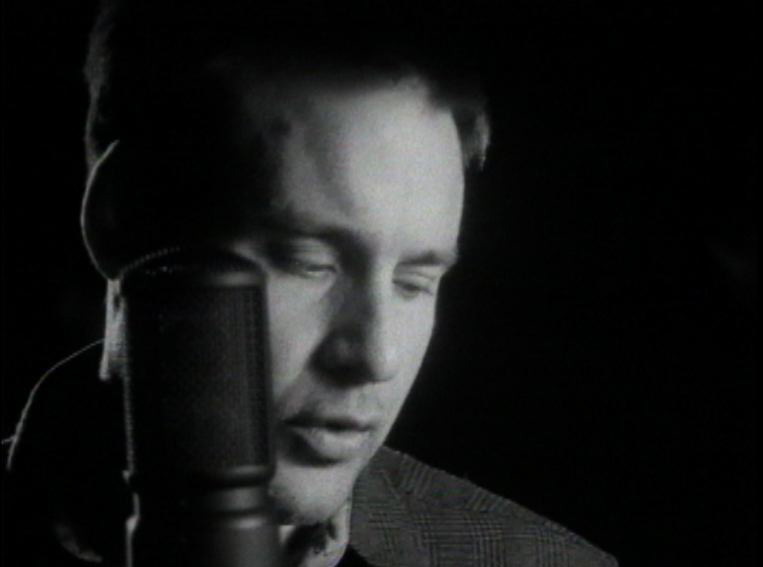
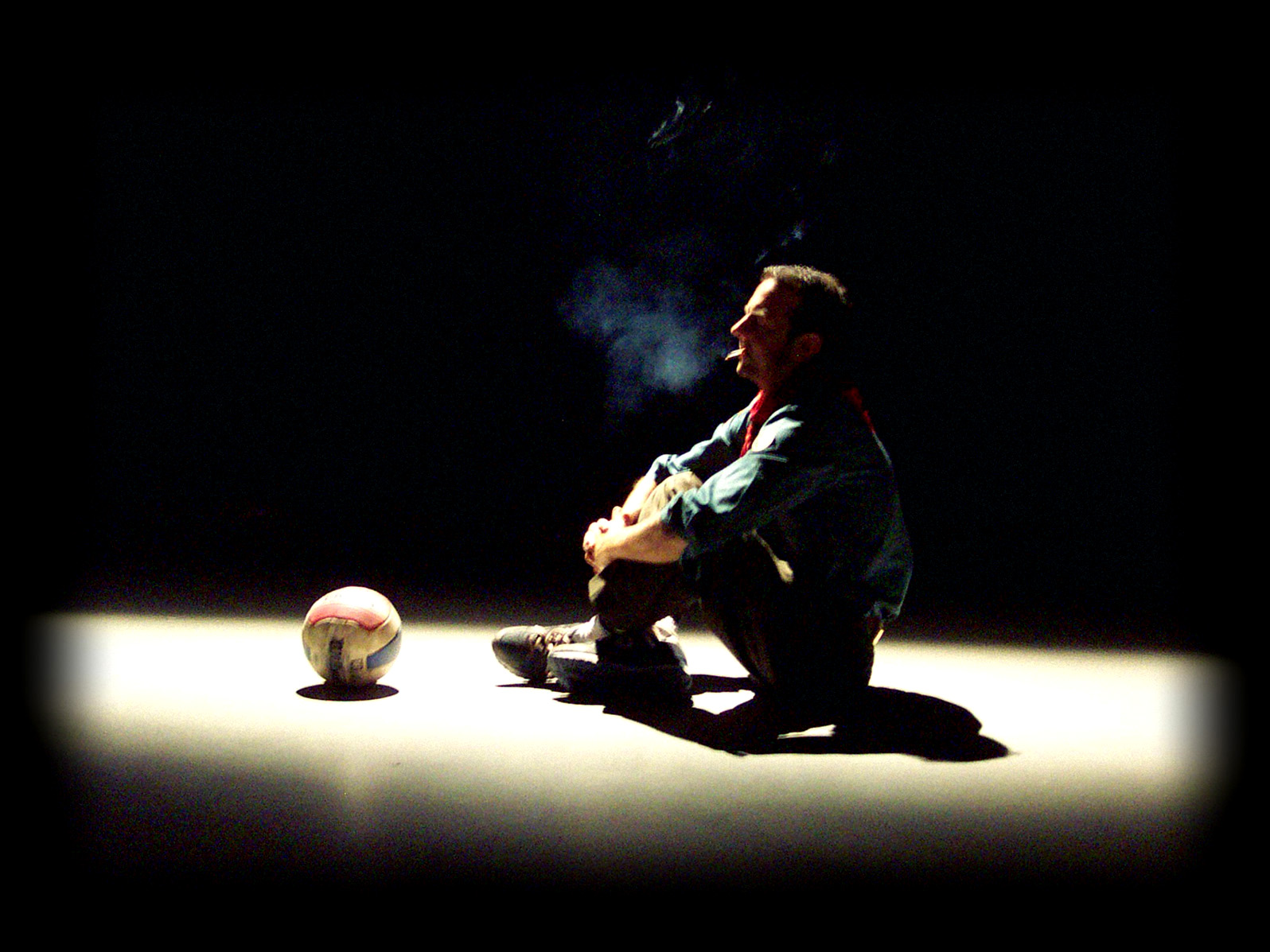
This is a film still from Scouts Are Cancelled, a documentary following poet John Stiles.
I am delighted to have been invited to contribute to a forthcoming poetry anthology about capital cities of the world.
The collection will be published in March 2015 and further details about the book will be posted here shortly.
Submissions are invited for a forthcoming series of PoetryFilm events. Work welcome: art films, text films, sound films, silent films, poet-filmmaker collaborations, auteur films, films based on poems, poems based on films, and other experimental text/image/sound screening or performance material. Please send hard copies of material in the post.
More information is below.
PoetryFilm is on Facebook and Twitter.
Please join the PoetryFilm Facebook Page and follow PoetryFilm on Twitter.


Aug 19
Dream Poem is in the PoetryFilm Archive and has been screened at a number of events. It was first screened at the PoetryFilm event at Tate Britain in April 2006, where Zata curated a programme on the theme of Dream.
Director’s Statement:
“In dreams it’s impossible to read the same thing twice and not have it change on you. In 2006 I made this poem from the perspective of someone who is having a fitful night’s sleep and is worried about their relationship, about loneliness, about death. The film was once played for the Sultan of Brunei, whose daughter is dyslexic. He actually sent me a sword to say thank you. It was all very strange. I still love it dearly, so I hope you enjoy it as much as the Sultan did. Please don’t send me any more swords.” – Dann Casswell
Biography: Dann Casswell
Since creating Dream Poem in 2006, Dann Casswell has worked full-time for the BBC on local radio, for BBC Children in Need and organising creative BBC Outreach projects in his home town of Bristol. He has had work published in various short story outlets and has had work commissioned by BBC Radio 4. Dann is now a director of CreativeConnection.co.uk where he works running the animation channel, writing, producing and directing beautiful short films and high-end communications for corporate and charity clients.
Notes
Dream Poem is a valuable example of a text-on-screen poetry film that could never be experienced in this way as written text on paper, or as spoken text. Even if each of the text iterations were transcribed into a sequence of concrete poems, the reader certainly would be able to read the words, but would not have the same experience as watching this ninety-second film.
The structure of Dream Poem alludes to secondary revision in psychoanalysis. “Secondary revision” is the expression Freud uses for the final stage of dream production: after the dreamer undergoes one or more of the four dreamwork processes (displacement, condesnsation, symbolization, projection), the dreamer then undergoes the secondary processes of the ego in which the more bizarre components of the dream are re-organized in order to present the dream with a comprehensible surface meaning. This surface meaning, once arrived at through secondary revision, is the manifest dream.
Part of the experience of watching Dream Poem is that there is not quite enough time to read the full text on the screen. Halfway through reading the text on the screen, that text changes, sometimes with surreal replacement words, like a glitch in the system. The text changes again, and again. The viewer questions whether what was read moments before was actually there. One questions one’s own perception. The word “Switzerland” changes to “Swindon”, for instance. The experience of scrambling to read all the text on the screen before it disappears is very similar to the act of trying to remember a dream that is slipping away upon waking, and perhaps this is frustrating; however, one of Dream Poem’s strengths is that creates within us an experience.
[Zata Kitowski]
Unknown Woman by Kayla Parker
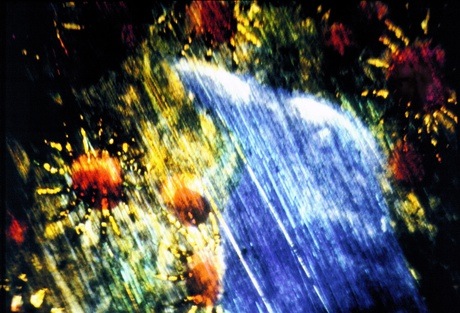
Unknown Woman is in the PoetryFilm Archive and has been screened at a number of events including PoetryFilm at Tate Britain and PoetryFilm at Curzon Soho. The film traces a woman’s psychological journey using a mixture of drawn animation, stop-motion and live-action footage; the film originated from dreams of a woman and a crow in which the two beings shared one sentience.
“The man looks the world full in the face, as if it were made for his uses and fashioned to his liking.
The woman takes a sidelong glance at it, full of subtlety, even of suspicion.”
Orlando, Virginia Woolf, Selected Works of Virginia Woolf p. 490
The below copy is taken from the artist’s website.
The next event will be PoetryFilm Equinox in September 2014 in London.
Submissions are welcome and further details will follow soon.
PoetryFilm is delighted to announce that is now a Member of Film Hub London, managed by Film London.
Film Hub London is proud to be a partner of the BFI Film Audience Network, funded by the National Lottery.
During Poetry International (18 – 21 July 2014), the Poetry Library’s exhibition space was turned into a giant page.
Visiting poets from all over the world were asked to contribute a line towards a new collaborative sonnet. The poem grew throughout the festival as lines were added by hand and the poem took its visual form.
The poets were: Kutti Revathi (Tamil), Nikola Madzirov (Macedonia), Ana Blandiana (Romania), Kayombo Chingonyi (Zambia), Rhys Trimble (Wales), Sujata Bhatt (India / USA / Germany), Sabrina Mahfouz (British / Egyptian), Michael Augustin (Germany), Inua Ellams (Nigeria), Tom Warner (England), Maitreyabandhu (England).
The Global Love Poem exhibition at the Saison Poetry Library also included PoetryFilm Blackboard, a participatory text/art project devised by Malgorzata Kitowski. (You can just see the blackboard and the participants on the right hand side of the screen.)


























 PoetryFilm