Skip to content

Posts from the ‘Art’ Category

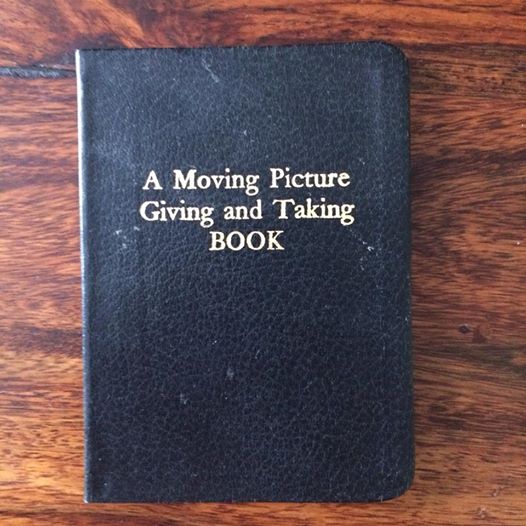
A Moving Picture Giving and Taking Book

Moving Picture


A Moving Picture Giving and Taking Book by Stan Brakhage, first edition, 1971.

“This book is dedicated to Michael McClure who spoke to me of the need for a short book on film technique which could be read by poets.” – Stan Brakhage.


Excerpt from “Characteristics of the New Amplic Phase in Poetry” – the Letterist Manifesto

“By emphasizing again the sound value of poetry, words in their printed form will not have any meaning that people need to labor over deciphering. Consonants will become empty, purely auditory, simple lines having physical meaning only in the listener’s ears. By placing value on effects beyond their usual meaning (in words), poetry will create a new sensitivity. In the place of the cerebral beauty that was created in the chiseling style of poetry, one responds simply with direct auditory understanding. It is then a matter of discovering the unknown abundance of purely oral constructions; of untangling the intangible accents in vocabulary. Poetry is thus liberated from all prose (reading for meaning without regard for tones), to become an instrument of lyrical communication. Poetry realizes its mission which is precisely to broadcast local imperceptibilities and applied suggestions, because poetry was created by individuals who wanted to understand each other, sensing the linguistic vibrations against their palates. Verse is the result of a need to consider the phonetic effects produced in other people’s imaginations. Letterism intends to introduce this beauty, which is limited in the present system of oral communication by lack of rules and even of letters. This is why it is necessary to regulate the stability of auditory frequencies by constructing elements specially designed for the purpose. It is a matter of enriching the possibilities for denoting the changes that occur between sound values. These particles of language, still inferior and unexpressed, must acquire proper signs so that they can develop in their own category, the auditory.”

Isidore Isou

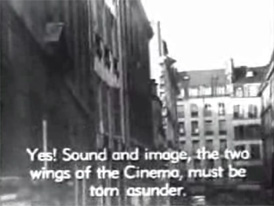
Film still from “Venon and Eternity” – Isidore Isou, 1951
Isidore Isou - Venom and Eternity 1

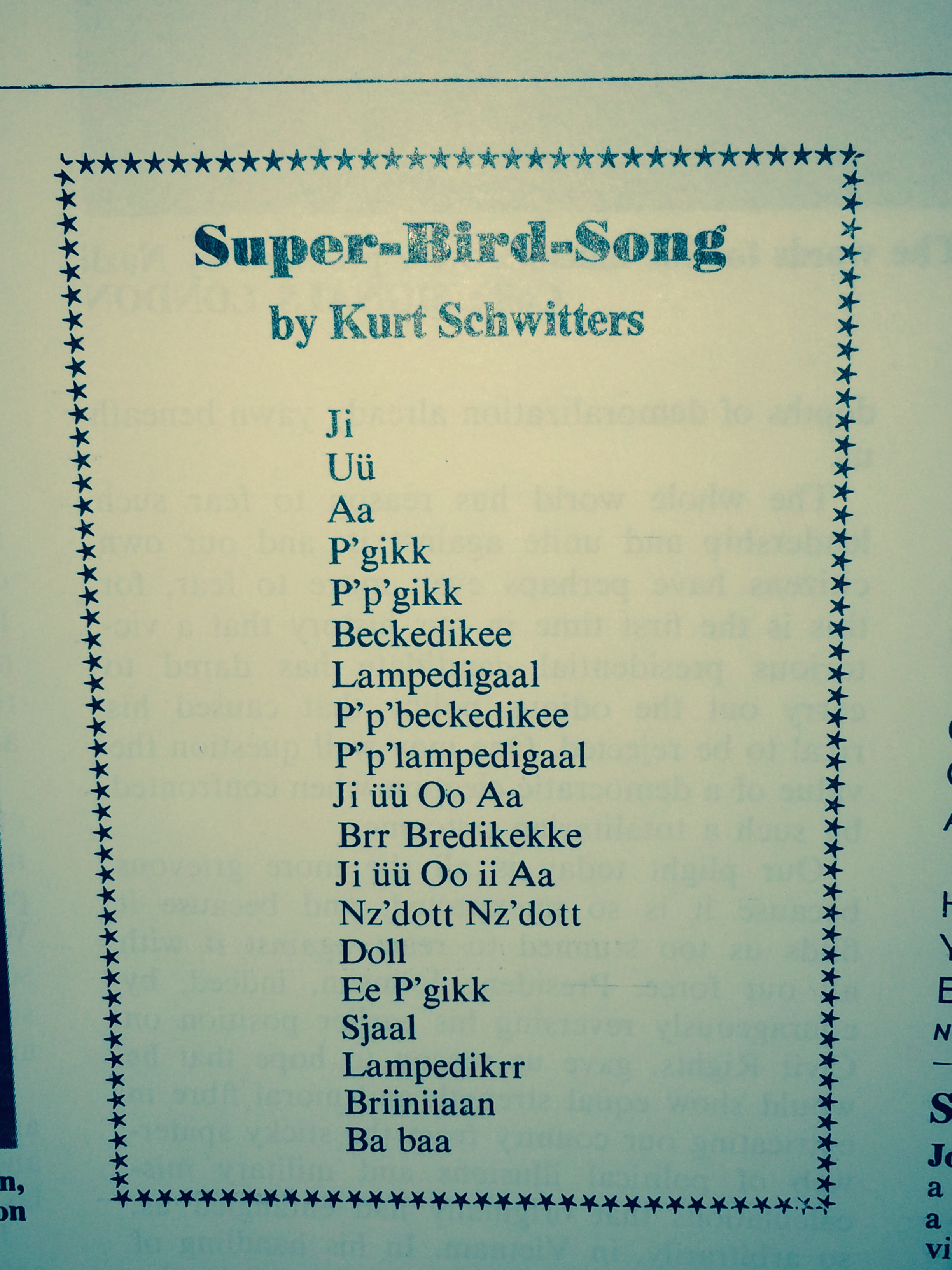
Super-Bird-Song by Kurt Schwitters

IMG_1748


Image taken at the Signals exhibition at England & Co gallery.

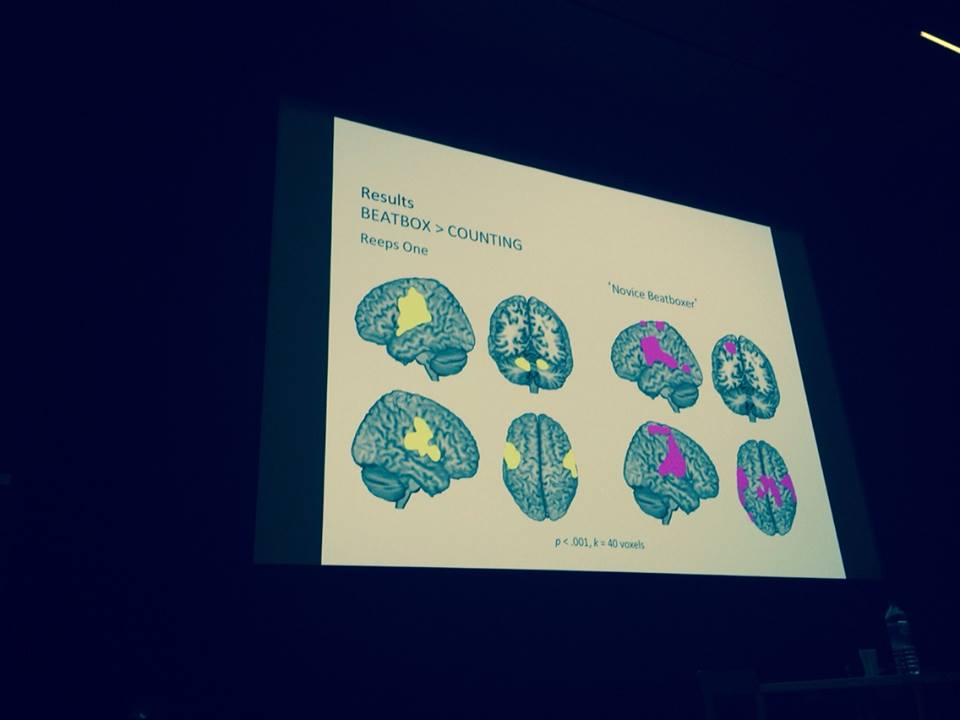
Beatboxing Brain Scans

Beatboxing


Image of MRI brain scans of an experienced beatboxer (left) and a novice beatboxer (right). The photo was taken at the Vocal Discords symposium at the RCA in March 2014 during Sophie Scott’s presentation of her research investigating language acquisition.

Automatic Art at GV Art: human and machine processes that make art

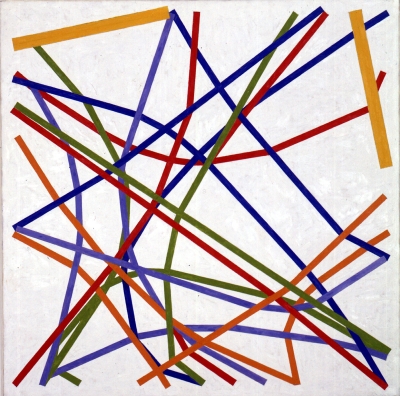
Kenneth-Martin-Chance-Order-Change-21...Divergences-1-1982-oil-on-canvas-91.4-x-91.4-©-The-Estate-of-the-Artist-courtesy-Annely-Juda-Fine-Art-London

Automatic Art is the latest show at GV Art. The exhibition presents 50 years of British art that is generated from strict procedures. The artists make their work by following rules or by writing computer programs. They range from system-based paintings and drawings to evolving computer generated images.

Private View: Thursday 3 July 2014, 6-9pm

Exhibition runs from Friday 4 July and ends Saturday 26 July 2014.

GV Art gallery, London, 49 Chiltern Street, Marylebone, London W1U 6LY 

The image is a piece by Kenneth Martin called Chance, Order, Change 21…Divergences 1, 1982, oil on canvas, 91.4 x 91.4 © The Estate of the Artist, courtesy Annely Juda Fine Art, London.

The full press release from GV Art is below.

Read more

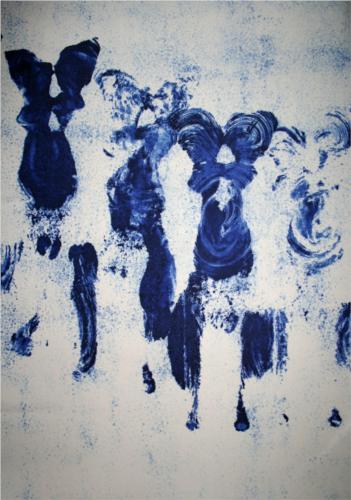
Untitled Anthropometry (ANT, 123) – Yves Klein


untitled-anthropometry-ant-123-1961


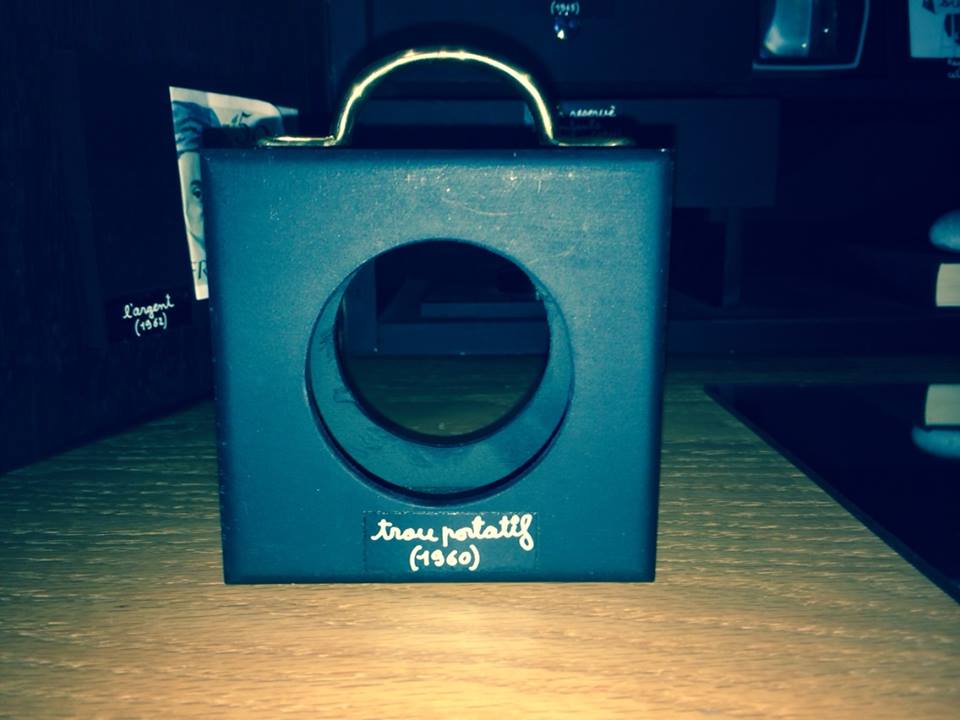
Ben Vautier’s “Trou Portatif” from the Sackner Archive of Visual and Concrete Poetry

Many thanks to Ruth and Marvin Sackner for the kind invitation to view their private collection in Miami.

Read more

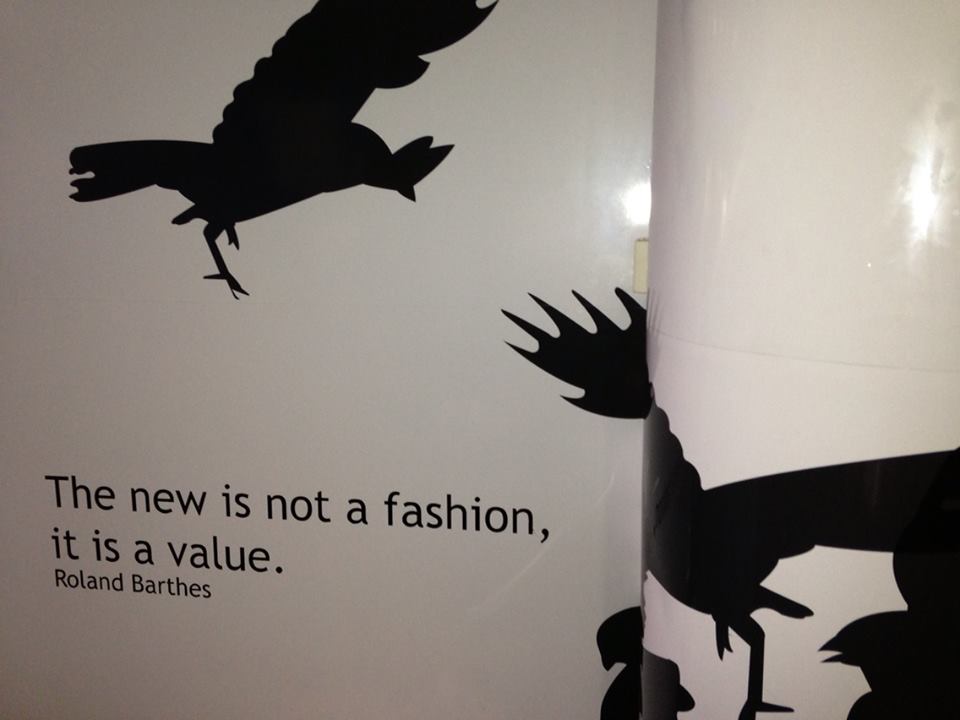
“The new is not a fashion, it is a value” – Roland Barthes

A wall in Birmingham.

Turn Me On: Kinetic Art at Christie’s: Objeto Cinetico C-11

Turn Me On: Kinetic Art at Christie's

Objeto Cinetico C-11 (1966–2004), Abraham Palatnik.

This is a picture from the show which ran from February 24 – April 7, 2014.

Turn Me On: Kinetic Art at Christie’s

Turn Me On: Kinetic Art at Christie's

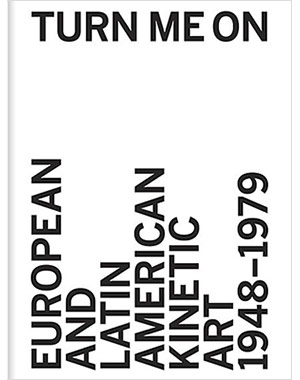
Turn Me On: European and Latin American Kinetic Art 1948-1979

24 FEBRUARY – 7 APRIL 2014 | LONDON

Christie’s is pleased to present Turn Me On, a private selling exhibition of Kinetic Art from Europe and Latin America. Focusing on motorised Kinetic works created from 1950 to the early 1970s, this exhibition presents works that reflect the new artistic tendencies and visual language explored in the postwar period. Today understood as part of the art historical lexicon, ‘ Kinetic Art’ was simultaneously explored across the globe by several groups concerned with creating art that incorporated motion. These artists redefined art’s traditional parameters by engaging with a wealth of new materials, processes and technology. It is the aim of this exhibition to assess this dialogue with a specific focus on the unique artistic collaborations and exchanges between Latin America and Europe. The resulting range of kinetic artwork is astounding and includes Pol Bury’s early works (which at first appear to be static but are in actuality brimming with movement) and Marina Apollonio’s Dinamica Circolare 9B, 1969 (which uses precise lines and colour variation to provide a flat two-dimensional object with the appearance of depth). These exhibited works achieve movement either spatially (through three-dimensional movement), non-spatially (using cinematic film, light, or color) or virtually (with optical illusion).

In charting Kinetic Art from its beginnings in post-war Europe to its role on the international stage, and in assessing for the first time the special dialogue between Latin American Kinetic Art and its European counterparts, we are pleased to re-engage in the dialogue initiated by the important international group of artists presented in this exhibition.

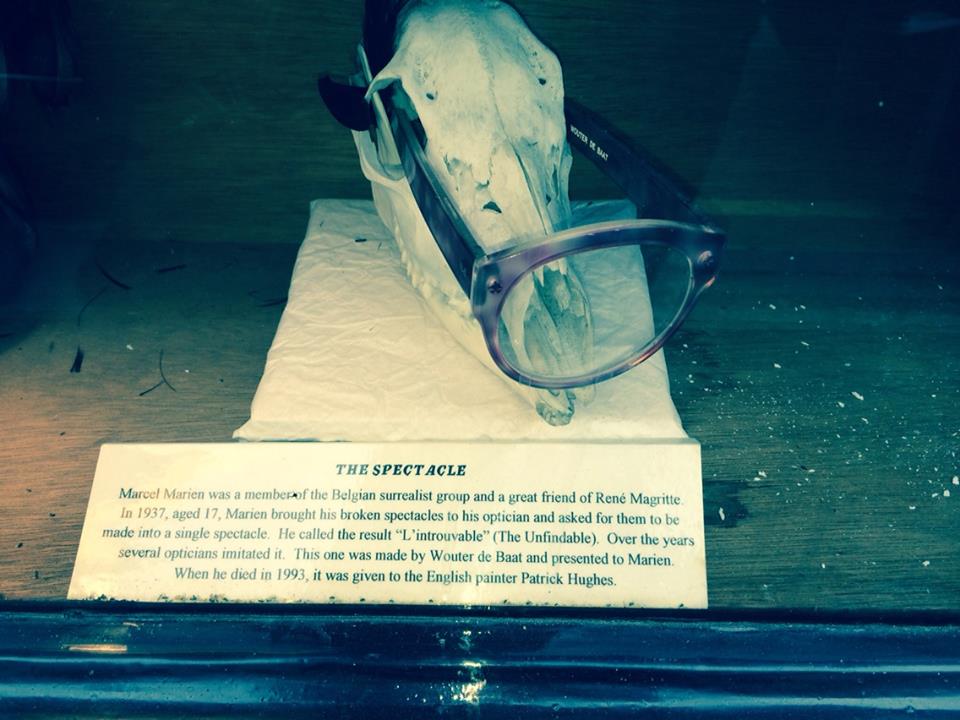
“The Spectacle” by Marcel Marien

Marcel Marien was a member of the Belgian surrealist group and a great friend of Rene Magritte. In 1937, aged 17, Marien brought his broken spectacles to his optician and asked for them to be made into a single spectacle. He called the result “L’introuvable” (The Unfindable). Over the years several opticians imitated it. This one was made by Wouter de Baat and presented to Marien. When he died in 1993, it was given to the English painter Patrick Hughes.

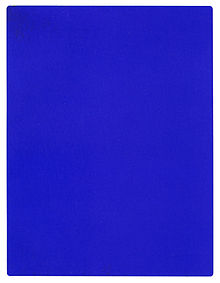
“IKB 192” by Yves Klein, 1962

International Klein Blue

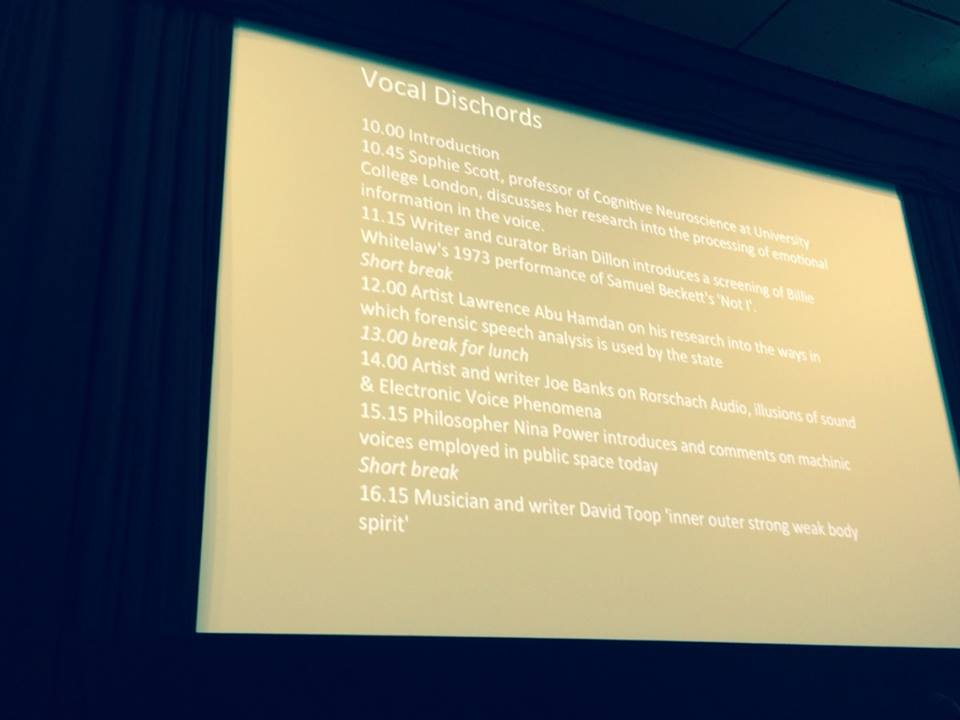
Agenda for the “Vocal Dischords” symposium at the RCA, March 2014

7 March 2014 | 10am – 5pm

Writers, critics, artists and scientists have been invited to explore the moments and conditions when the voice appears to detach itself from the body, seemingly acquiring autonomy.

Speakers include Sophie Scott, professor of Cognitive Neuroscience at University College London, who will discuss her research into the processing of emotional information in the voice; Brian Dillon will offer reflections on Billie Whitelaw’s 1973 performance of Samuel Beckett’s Not I; artist Lawrence Abu Hamdan will reflect on his research into the ways in which forensic speech analysis is used by the state; artist and writer Joe Banks will talk about Rorschach Audio, Illusions of Sound & Electronic Voice Phenomena; philosopher Nina Power will introduce and comment on machinic voices employed in public space today. Musician and writer David Toop will end the day with a presentation/performance.

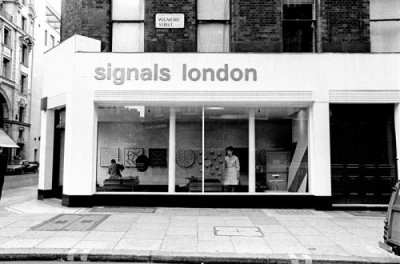
SIGNALS London (1964 – 1966) at England & Co Gallery

SIGNALS London (1964 - 1966) at England & Co Gallery

Signals – which grew directly out of ‘The Centre for Advanced Creative Study’ set up in London in 1964 – was ‘dedicated to the adventures of the modern spirit’. With its exhibitions and events, the opening of a gallery in London’s West End, together with the publication of the influential Signals Newsbulletin, Signals became a centre for experimental international artists, with links formed between the avant-gardes of Latin America, Europe and London.

England & Co are holding a small survey exhibition devoted to Signals – a key London outpost for many of the Latin American artists of the 1960s avant-garde – opening to coincide with the forthcoming exhibition starting in July at the Royal Academy in The Sackler Wing Galleries: Radical Geometry: Modern Art of South America from the Patricia Phelps de Cisneros Collection.

Private View: Thursday 26 June 6-8:30pm to coincide with the Fitzrovia Lates programme.

The show runs until July 26, 2014.

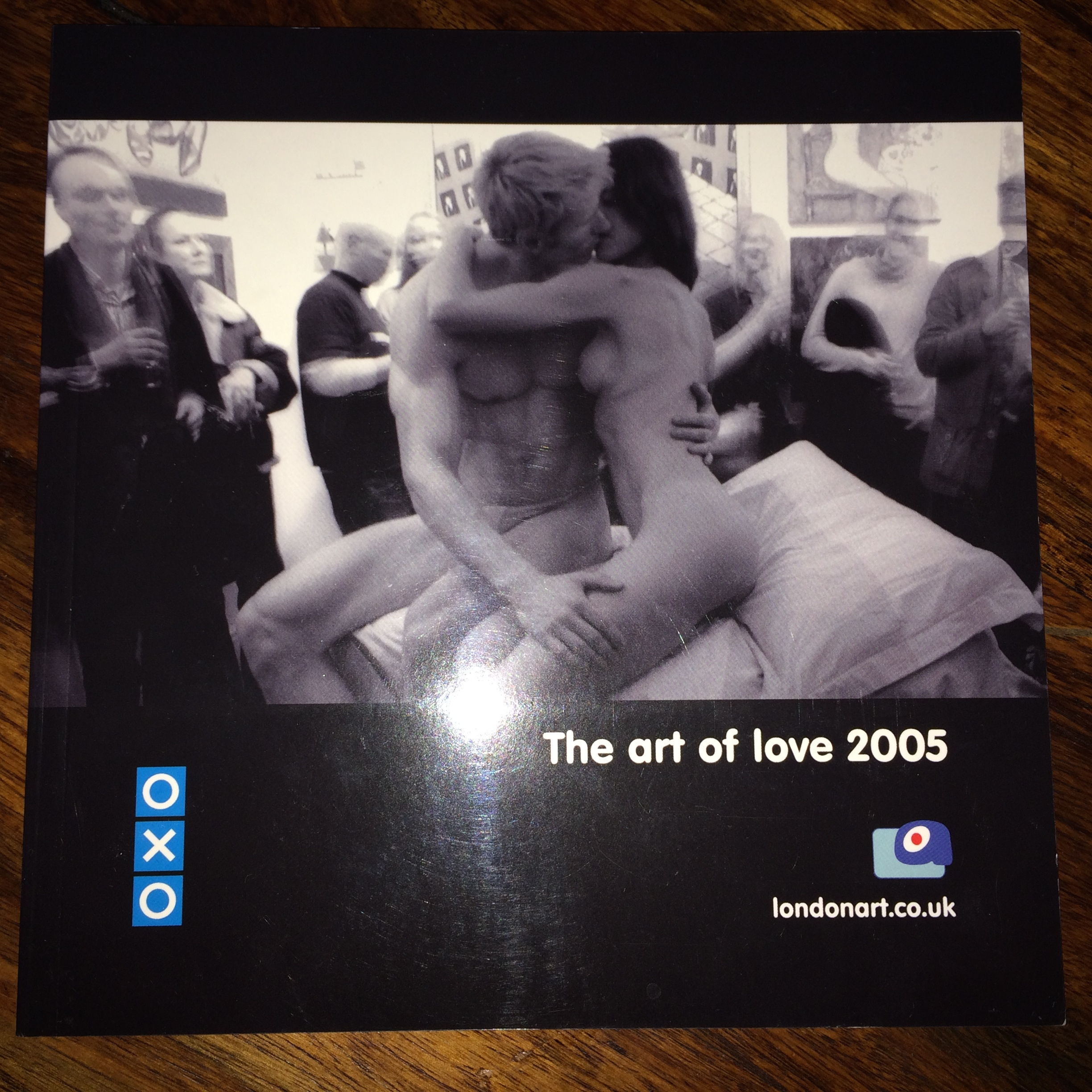
“The Art of Love” book which accompanied the show at the OXO Gallery in February 2005

The Art of Love 2005

Londonart.co.uk invited visual artists, writers, poets and musicians to submit works on the theme of Love.

The poetry was selected by Andrew Motion, Poet Laureate at the time.

Zata’s poem Eye is featured in the book.

The event took place in the gallery@oxo and Bargehouse in the famous Oxo Tower Wharf.

The exhibition was open for a three week period, from the 10th to the 27th February 2005. During that time the exhibition received over 9000 visitors, and attracted national and international press coverage which included The Times, Time Out, The Guardian Guide and the BBC World Service. The exhibition also established sales with a number of private collectors and art dealers as well as generating private sales.

On the opening evening over 2500 visitors arrived. Jessica Michaels, Natalie Arnold and the Rubber Band performed songs live in the gallery. Poets Joan Michelson, Kirsten Harris and Jennifer Copley read out their poems to a packed-out audience. Rodin’s “The Kiss” sculpture was re-enacted.

Paul Wynter, Managing Director of Londonart.co.uk said, “What a wonderful reaction to love. The atmosphere of the opening night was perfect for the theme of Love. The response was simply phenomenal with the exhibition full to capacity with people enjoying the art, performances and poetry.”